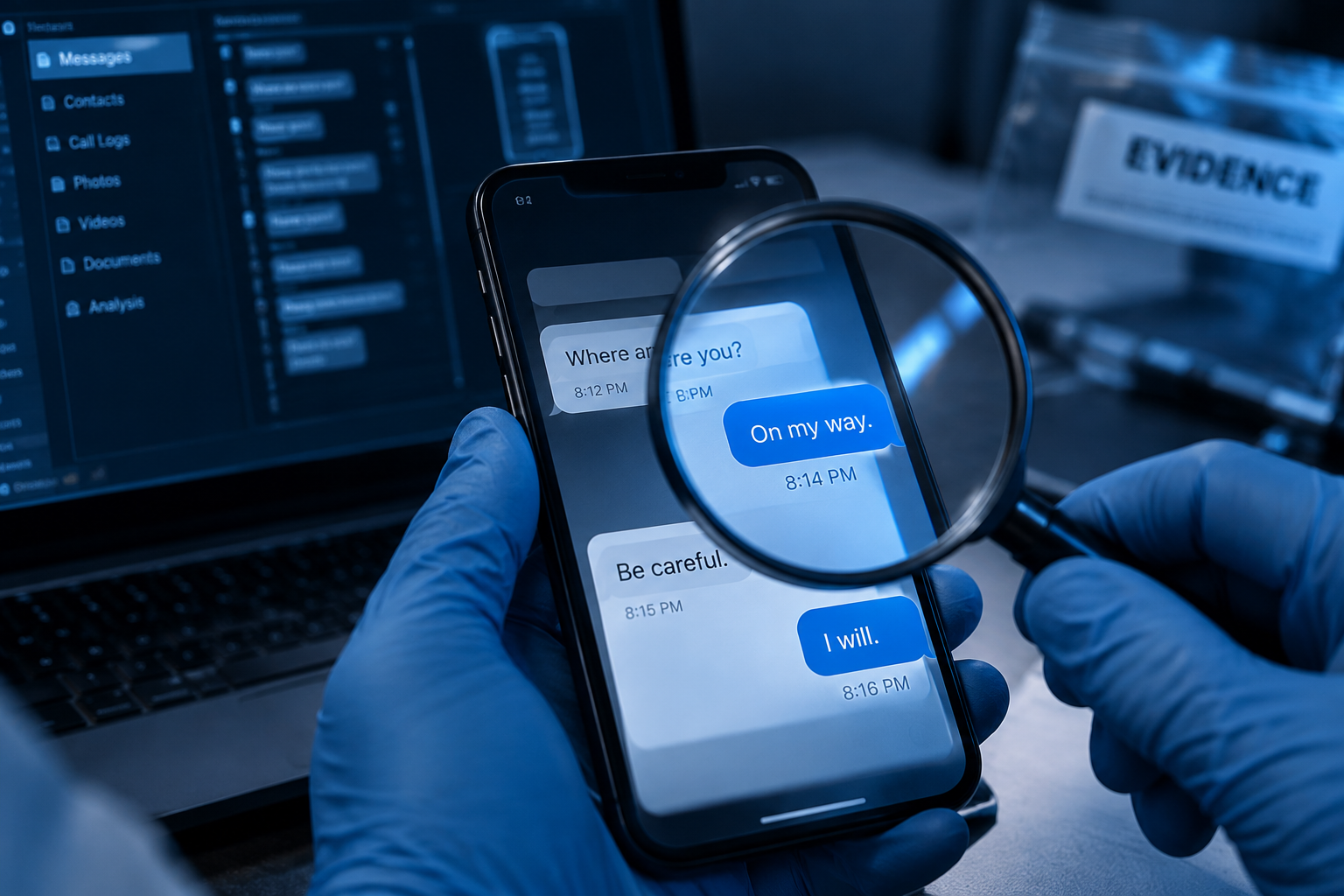
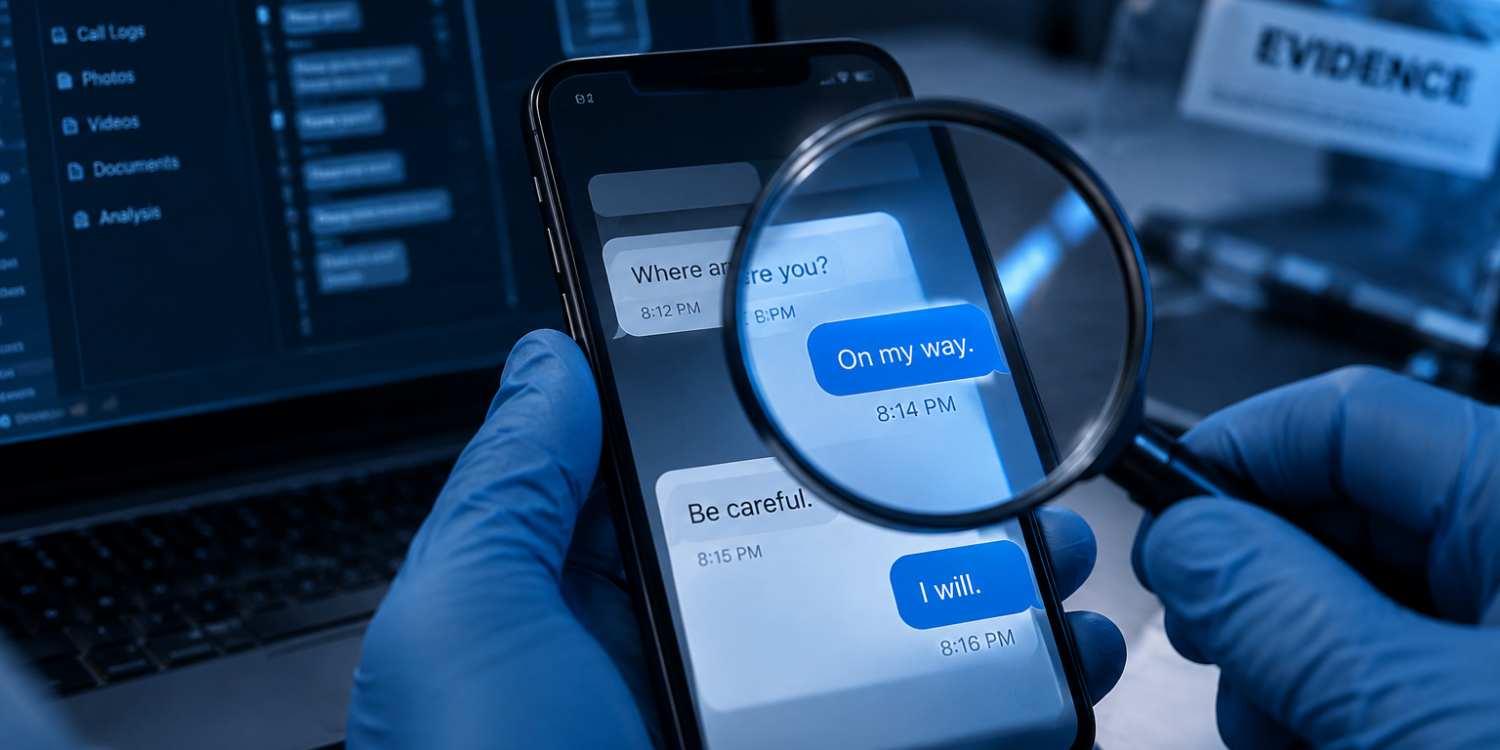
Imagine this. Your client walks into your office, confident they have the evidence needed to support their case. They pull out their phone, show you a WhatsApp screenshot, and say, “This proves everything.”
But does it?
WhatsApp has become more than just a messaging platform. From casual conversations to business negotiations, contractual discussions, internal instructions, and even confidential exchanges, important decisions are often made through a few taps on a screen.
Naturally, when disputes arise, these conversations may become valuable evidence in legal proceedings.
But here’s the catch. A screenshot doesn’t necessarily tell the whole story.
It may show what was supposedly said, but can you be certain the conversation is complete? Were messages deleted? Was the exchange taken out of context? Could the screenshot have been edited or manipulated?
And perhaps more importantly, what happens when the other party challenges its authenticity?
When a Simple Screenshot Becomes a Serious Problem
Consider a situation where an organisation faces a contractual dispute. One party produces a WhatsApp screenshot suggesting that certain terms were agreed upon. The other party denies ever agreeing to them.
Or perhaps an employee is accused of sharing confidential company information through WhatsApp. Screenshots are presented as evidence, but questions remain about who sent the messages, when they were sent, and whether the conversation has been accurately represented.
These situations can have serious implications for organisations, ranging from financial losses and reputational damage to employment disputes, regulatory scrutiny, and legal proceedings.
The challenge isn’t always the absence of evidence. Sometimes, it’s whether the evidence can be trusted.
A screenshot is a visual representation of a conversation. On its own, it may not provide sufficient technical information to establish the origin, integrity, or completeness of the underlying messages.
This is where digital forensic examination becomes particularly relevant.
Looking Beyond What Appears on the Screen
Digital forensics involves the systematic identification, preservation, examination, and analysis of digital evidence using established forensic methodologies.
In the context of WhatsApp, forensic analysts may examine the source device and available application data to identify message records, timestamps, contact information, media attachments, and other relevant digital artefacts.
Where technically possible, the examination may also help identify deleted messages, inconsistencies in available records, or information that provides additional context to a disputed conversation.
For example, a screenshot may show a message allegedly sent at a particular time. Forensic examination may help determine whether corresponding message records exist on the device, whether the available timestamps are consistent, and whether other artefacts support or contradict the account presented.
However, forensic examination is not a guarantee that every message can be recovered or authenticated. Findings depend on factors such as device accessibility, application versions, encryption, data retention, and the condition of the available evidence.
The purpose is not to make the evidence fit a particular narrative, but to establish what the available digital evidence can reliably support.
Why Evidence Preservation Matters
There is another important consideration that organisations and legal practitioners sometimes overlook: how the evidence is handled.
When a dispute arises, the instinct may be to forward screenshots, export conversations, delete unrelated messages, or continue using the device as usual.
However, certain actions may alter or overwrite relevant digital artefacts, potentially limiting what can be examined later.
Early evidence preservation, including appropriate forensic acquisition, integrity verification through hash values where applicable, and documented chain-of-custody procedures, helps maintain the reliability and traceability of the evidence.
For legal practitioners, this can be particularly important when preparing for litigation, responding to allegations, or assessing the strength of a client’s position.
After all, having evidence is one thing. Being able to explain where it came from, how it was preserved, and what it actually demonstrates is another.
So, Can You Trust That Screenshot?
The answer is not necessarily yes or no.
A screenshot may be genuine and useful. It may also be incomplete, misleading, or difficult to independently verify. Its significance depends on the circumstances, the supporting evidence, and the questions being examined.
Digital forensics provides a means of investigating those questions through objective technical analysis rather than assumptions.
And sometimes, the most important part of a conversation isn’t what appears in the screenshot. It’s what happened before, after, or in between.
So, the next time a client says, “I have the WhatsApp evidence,” perhaps the better question is:
“Do we have the evidence to support the WhatsApp screenshot?”
At SIAGA Informatics, we support legal practitioners and organisations through digital forensic examination, evidence preservation, and litigation support, helping them better understand the digital evidence involved in their disputes.
Because when a conversation becomes evidence, every detail may matter.
The conversation may tell a story. Digital evidence helps establish how much of that story can be verified.